
Technology & AISeptember 13, 20265 min read
Automating Content Pipelines with n8n and AI for SEO
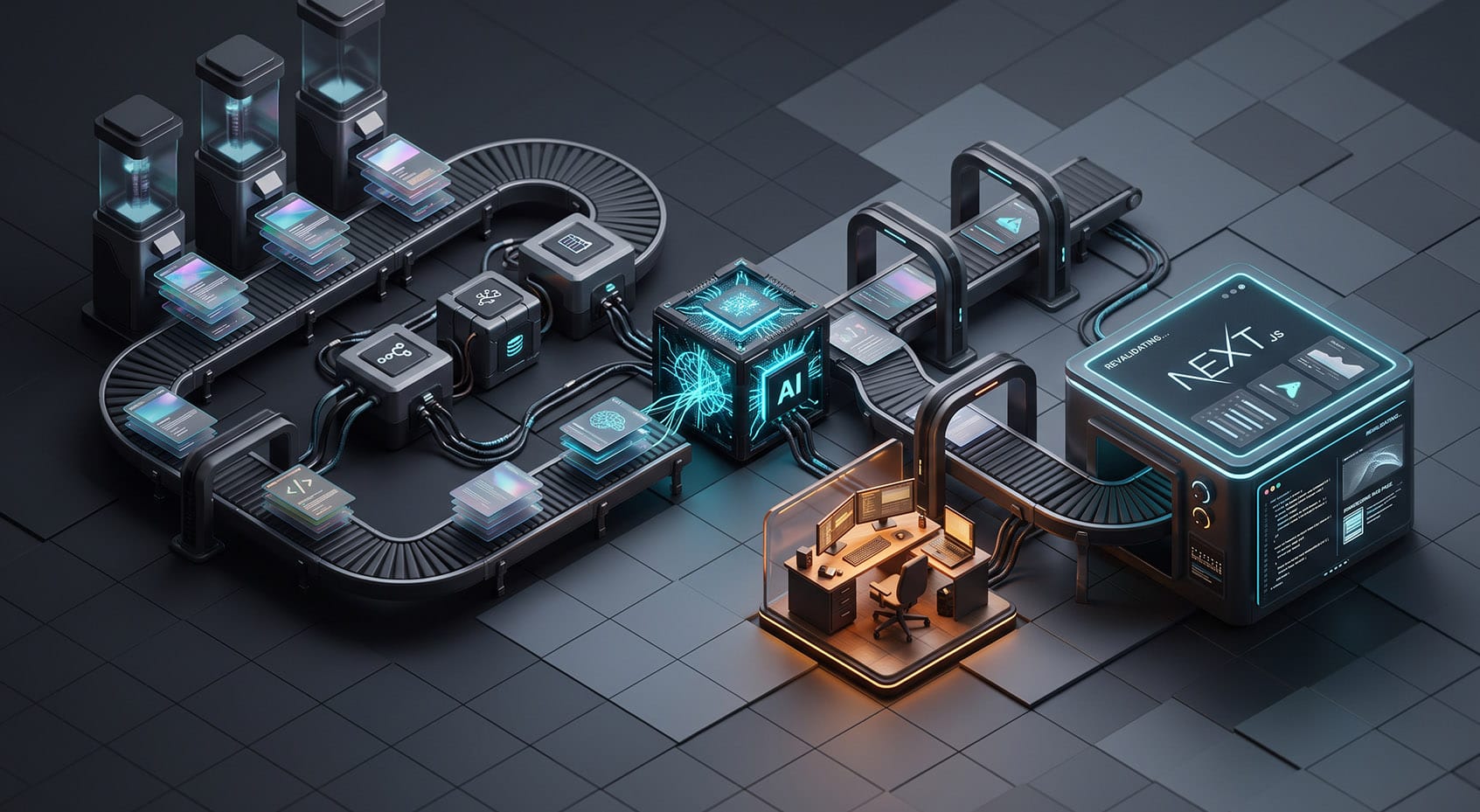
Build an AI content pipeline with n8n, Next.js, and your CMS. Automate briefs, drafts, QA, and publishing—scale content creation without losing quality.


If your B2B site is getting more visits from Google AI Overviews, ChatGPT, Perplexity, or rich SERP features, you’re not alone. AI-driven discovery is changing how buyers research and shortlist vendors. The problem: traffic is up, but pipeline isn’t. Traditional landing pages and single CTA forms don’t convert this new, high-intent search behavior.
This article shows you how to rebuild your B2B conversion rate optimization around an AI-to-opportunity architecture. The goal is simple: turn AI search clicks into qualified conversations, consistently, and lift website ROI.
AI assistants compress research. Buyers now arrive with stronger intent signals and specific questions. Your site must meet that intent immediately, maintain information scent from the SERP or AI snippet, and present multiple conversion paths that match readiness (talk to sales, calculator, demo video, benchmark report, sandbox, pricing estimator).
Winning teams implement a modular lead generation architecture with these layers:
Do this and you’ll increase AI search traffic conversion and shorten time-to-revenue.
High intent search isn’t only “buy now.” In B2B it often looks like: pricing, vendor comparisons, integration checks, security reviews, or ROI questions. AI assistants paraphrase these into natural language prompts.
How to Fix It:
When someone clicks from an AI overview or featured snippet, they expect to see the same language and objects. Break that scent and bounce rate spikes.
How to Fix It:
Not everyone wants a demo. Some need proof, numbers, or self-serve exploration. Put three conversion paths above the fold and repeat them down the page.
How to Fix It:
Repeat the CTA block after major sections and at the end. Use intent-based variants (e.g., “See SOC 2 controls” on security pages).
AI-driven visitors skim fast. Long forms or vague CTAs stop them.
How to Fix It:
Your best-performing B2B conversion rate optimization ties scoring to both intent strength and ICP fit.
How to Fix It:
If they’re ready, the only KPI that matters is speed. AI-era buyers evaluate multiple options in hours, not weeks.
How to Fix It:
AI models extract and summarize. Make your content machine-readable and unambiguous.
How to Fix It:
Optimize for revenue, not visits. Tie AI search traffic to opportunities and win rate.
How to Fix It:
| Layer | What It Is | Examples | Primary KPIs | Tools |
|---|---|---|---|---|
| Traffic & Intent | Map queries and assistant prompts to stages | Pricing, alternative comparisons, integration checks | Qualified sessions, intent score | GSC, analytics, log-based referrers |
| Information Scent | Match language and entities from SERP/AI | H1 mirrors query, summary answer block | Bounce rate, scroll depth | Heatmaps, session replay |
| Offer Portfolio | Three-path CTAs by readiness | Demo, ROI calc, security one-pager | CTA CTR, offer completion | CMS, modal/form tools |
| Forms & Flows | Short forms, progressive profiling | Autofill, enrichment, embedded calendar | Form CVR, drop-off rate | Form SDKs, enrichment APIs |
| Qualification | Intent + fit scoring | Page weights, firmographics | MQL→SQL rate | MAP, CRM, enrichment |
| Routing | Fast handoff to reps | Rules, alerts, scheduling | Speed-to-lead, contact rate | CRM, calendar, chat |
| Attribution | Track to opportunity | Touchpoint stitching | Pipeline $, win rate | Attribution platform |
Problem: High traffic to pricing queries, low demo conversions.
Fix: Replace generic pricing page with:
Result to expect: More mid-path conversions that warm into demos, higher MQL→SQL because self-qualification improves.
Problem: Searchers ask assistants: “Does [Your Tool] integrate with Snowflake/HubSpot?”
Fix: Create short, focused integration pages with:
Result to expect: Higher conversion from assistant-referrals because you mirror their exact intent.
Problem: Security reviewers bounce when they can’t find compliance evidence fast.
Fix: Build a Security Hub:
Result to expect: Faster technical validation, fewer stalled deals.
Evaluate by SQLs and pipeline, not just click-throughs.
Answer engines will keep absorbing early-stage clicks. That’s fine - if your content is the source they cite and your site converts the motivated few who click through.
Strategy shift: create content that assistants can quote confidently, then build pages that convert those citations into meetings.
Expect more structured data usage, verified sources, and assistant-specific referral tags. The winners will maintain data accuracy, speed-to-lead, and multi-path offers.
Your job isn’t just to attract traffic; it’s to architect the next best action for each visitor. Build a modular system that recognizes intent, preserves information scent, offers multiple conversion paths, qualifies intelligently, and routes instantly. That’s how you turn AI-driven discovery into revenue and maximize website ROI.
AI traffic arrives with stronger, more specific intent and expects immediate answers. You need tighter information scent, concise answer blocks, and multiple CTAs matching readiness. Traditional single-CTA, copy-heavy pages underperform.
It varies by industry and intent mix, but for high-intent pages (pricing, integration, comparisons), 3–7% to SQL is a reasonable target. Track by page intent and measure to pipeline, not just leads.
Bucket AI referrals (Overviews, assistants, rich results), attribute to opportunities, and compare cost of content/ops vs. pipeline and closed won. Use weekly cohorts and control pages for cleaner reads.
Gate selectively. Keep foundational proof (security overview, integration basics, pricing ranges) accessible so assistants can cite you. Gate deep assets (full reports, calculators’ outputs) after delivering initial value.
If your traffic is growing but pipeline isn’t, the issue isn’t awareness - it’s architecture. Start with your top five high-intent pages. Add a scent-matched headline, three-path offer block, shorter forms with enrichment, and instant routing. Measure by SQLs and pipeline. Iterate weekly.
Looking to automate your business? Explore my AI Automation Services to build intelligent workflows, connect your existing tools, and automate repetitive processes with AI.

IT & Business Enablement Leader
IT & Business Enablement Leader and Full Stack Developer with 15+ years of experience delivering scalable, high-performance digital solutions across Pakistan and the UAE. Specialising in React, Next.js, AI integrations, and workflow automation.
Build an AI content pipeline with n8n, Next.js, and your CMS. Automate briefs, drafts, QA, and publishing—scale content creation without losing quality.
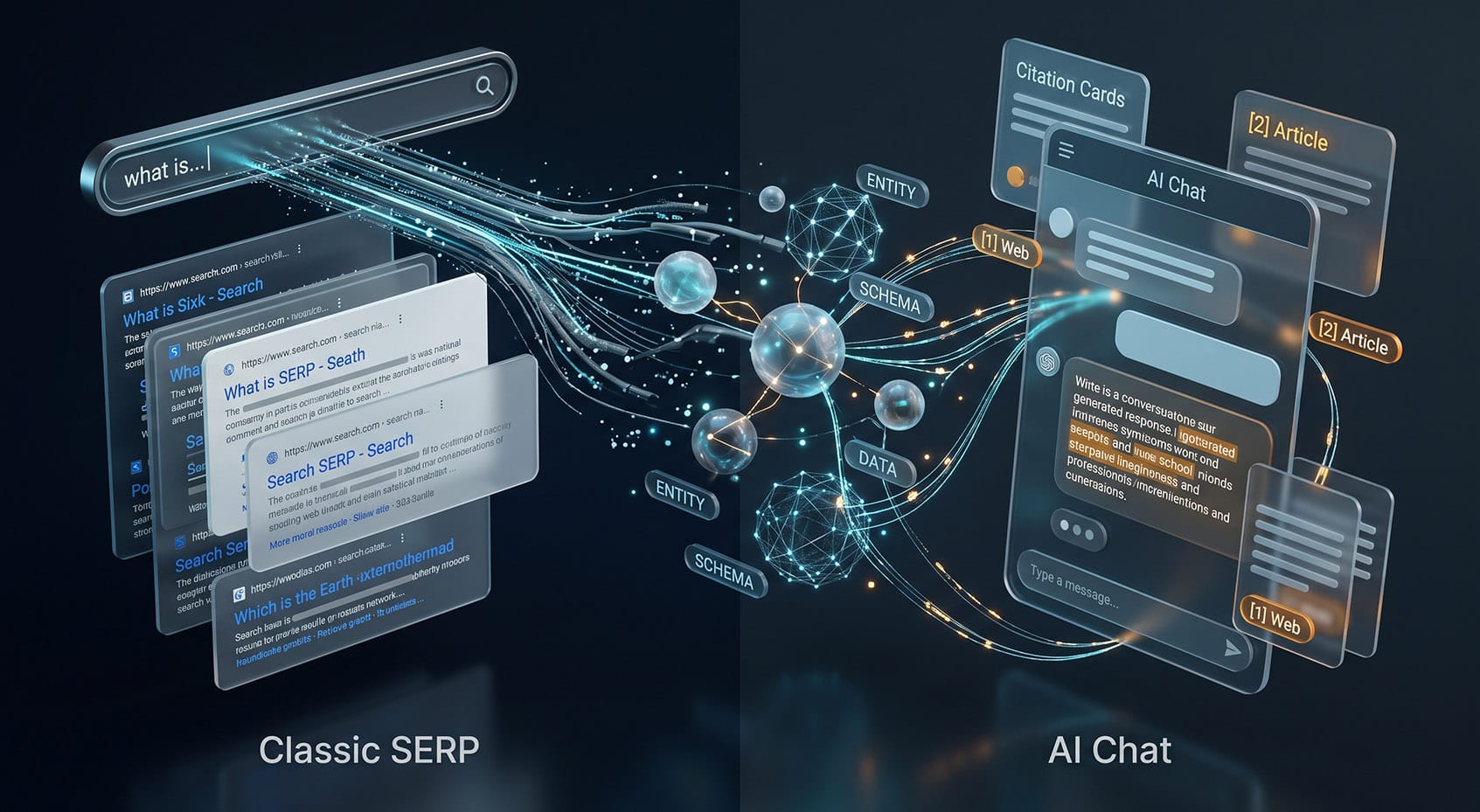
Learn Generative Engine Optimization (GEO): how to rank in ChatGPT and Google AI Overviews with entity-first content, schema, and answer units that LLMs cite.